JIGOKUDANI YAEN-KŌEN · LIVE CAMERAS
The snow monkey live cam, and the forecast that is more use than it
The park runs two cameras on the pool — a still picture and a video stream — and publishes a predicted time for the monkeys coming down from the mountain. Both are free, both are the park’s own, and this page links to them rather than wrapping them in advertising. What it adds is the honest part: what each one can tell you, and at what point in your day it stops being actionable.
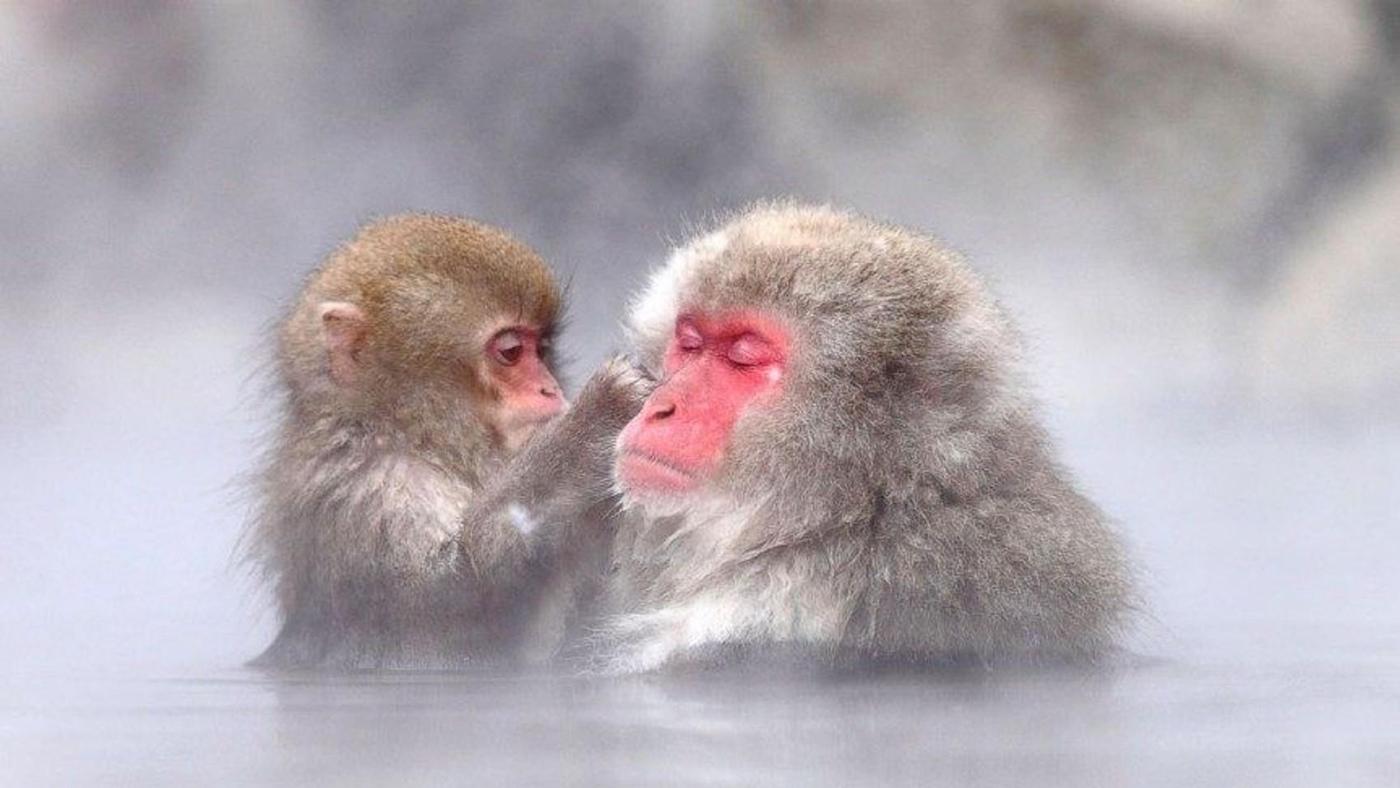
They point at the pool. If there are monkeys in it you will see them; if there are not, that is also the answer.
Both camerasBBEFORE YOU TRAVELAlso freePUBLISHED BY THE PARK · A PREDICTED TIME FOR THE TROOP COMING DOWN · THE THING TO CHECK THE NIGHT BEFOREMore useful than the camera for anyone not already in the valley, because it is about later today rather than this second.
What the forecast isPark staff work to attract the monkeys during opening hours, but the monkeys may not show up at all on certain days; appearances are particularly sporadic in autumn. A camera showing an empty pool at 09:00 is not a wasted day, and a full one is not a booking.
QUICK ANSWERS — THE CAMERAS IN FIVE LINES
- Is there a live cam at the Snow Monkey Park?
- Two, both run by the park: a still-picture camera and a video stream, on its own site. Links are in section 01.
- Do the cameras run at night?
- They point at an unlit outdoor pool in a mountain valley, so what you get after dark is a dark pool. The useful window is the park’s own hours: 8:30–17:00 from April–October and 9:00–16:00 from November–March.
- Why is the pool empty when I look?
- Because the monkeys bathe to stave off the cold in winter; they do not use the baths at all hours of the day, nor throughout the year. An empty pool at two on a warm afternoon is normal, not a fault.
- Can the camera tell me whether to go today?
- Only if you can still reach the gate — about 100 minutes from Nagano Station, bus and walk together, before the park’s last-arrival rule.
- What should I check the night before?
- The forecast rather than the camera: the park publishes a predicted time for the monkeys coming down from the mountain and asks visitors to check before traveling and again on the day, through its live cameras and social accounts.
SOURCE MARKS IN THE MARGIN官official — the park or the operator publishes this二confirmed by two independent sources計counted here, on this page, from the figures above?a single source, so it is stated softly
The two cameras, and what each is for
Two cameras, two different jobs, and one of them loads faster than the other on a train.
OFFICIAL PARK CAMERAS NOT AN AFFILIATE LINK · NO COMMISSION
The still-picture cameraA FRAME OF THE POOL THAT REFRESHES · QUICKEST ANSWER TO «IS ANYTHING IN THE WATER» · WORKS ON A BAD CONNECTIONjigokudani-yaenkoen.co.jp ↗The video streamTHE SAME VALLEY, MOVING · WORTH THE LOADING IF YOU WANT TO SEE HOW MANY, NOT WHETHER ANYjigokudani-yaenkoen.co.jp ↗Both links go to the park’s own site and open in a new tab · they are not affiliate links and this site is paid nothing for them · what they show is one small hot spring in a fenced valley at the end of a 1.6–2 km path, with about 160 wild macaques free to be somewhere else · the park’s pages change occasionally, so if a link moves, start from its home page
The forecast, which is the more useful of the two
CHECK THE FORECASTIf you are reading this the night before, close the camera and read the forecast instead.
The park publishes a predicted time for the monkeys coming down from the mountain and asks visitors to check before traveling and again on the day, through its live cameras and social accounts
What it predicts
A time for the troop coming down from the mountain — the single variable the whole visit turns on.
Why it beats the camera
A camera tells you about now. Unless you are already in the valley, now is not the hour you are going.
When to look
The park asks visitors to check before traveling and again on the day. Both, not either.
What it cannot do
Park staff work to attract the monkeys during opening hours, but the monkeys may not show up at all on certain days; appearances are particularly sporadic in autumn — a forecast of a wild animal is a forecast, not a timetable.
A camera checked after about midday in November–March is entertainment; a camera checked at breakfast is information.
60 + 40 = 100 minEXPRESS BUS, WORST CASE + THE WALK, WORST CASE
From Nagano Station the gate is about 100 minutes away — up to 60 on the express bus and up to 40 on foot — and the park asks for arrival 30 minutes before it closes at 16:00.
FREE, AND THE PARK’S OWN Both cameras and the forecast are the park’s, and they cost nothing. No ticket or guide shifts the odds they show. Thermoregulation and lower stress hormones — everybody watching, at every price, is watching the same pool. What you can still choose is the month, and the hour you arrive.
Reading an empty pool correctly
AN EMPTY POOL IS NORMALAn empty pool means four different things depending on the month and the hour, and only one of them is bad news.
The rule underneath all four rows: the monkeys bathe to stave off the cold in winter; they do not use the baths at all hours of the day, nor throughout the year — the camera is showing you weather and appetite, not opening times · the odds, month by month and hour by hour →
IF THE CAMERA HAS TALKED YOU INTO GOING The day out of Nagano Station carries the ¥800 (≈$5.1) ticket, the bus and the timing — the part a camera cannot help with once you have decided. Doing it yourself is entirely reasonable and costs a quarter as much; the calendar is simply the fastest way to find out whether tomorrow is even available.
LIVE DATES · $140 (≈¥21,800) · FROM NAGANO STATION · TICKET INCLUDED · 965 REVIEWS
The cameras, in 7 questions
Is there a Snow Monkey Park live cam?
Yes — the park runs two, a still-picture camera and a video stream, on its own website. Both are free and both are linked in section 01 of this page.
What time are the monkeys in the hot spring?
There is no fixed time. The monkeys bathe to stave off the cold in winter; they do not use the baths at all hours of the day, nor throughout the year, and park staff work to attract the monkeys during opening hours, but the monkeys may not show up at all on certain days; appearances are particularly sporadic in autumn. The park publishes a predicted time each day, which is the closest thing to an answer that exists.
Why is the live cam showing an empty pool?
Most often because it is warm or because the troop is still up the mountain. Thermoregulation and lower stress hormones — in summer air there is nothing to warm up against, so an empty pool in August is the normal state.
Does the live cam work at night?
It points at an unlit pool, so after dark there is nothing to see. Treat the park’s own hours as the useful window: 8:30–17:00 from April–October and 9:00–16:00 from November–March.
Can I use the camera to decide whether to go today?
Only if you can still get there. From Nagano Station the gate is roughly 100 minutes away including the 1.6–2 km walk, and the park asks for arrival 30 minutes before closing — so in winter the decision has to be made in the morning, not at lunchtime.
Is the forecast reliable?
It is the park’s own prediction, made by the people who feed the troop, which makes it the best available. It is still a prediction: park staff work to attract the monkeys during opening hours, but the monkeys may not show up at all on certain days; appearances are particularly sporadic in autumn.
Does a tour improve the odds?
No, and this page is not going to suggest otherwise. Everyone in the valley is watching the same pool. What the $140 (≈¥21,800) day trip changes is the ticket, the transport and the timetable — not whether the monkeys come down.
Camera links and the daily forecast are the park’s own · the guided day, with live dates →
Check the forecast at breakfast, the camera on the bus
In that order. One tells you whether today is worth the 1.6–2 km; the other tells you what you are walking into. Neither of them is a booking, and neither of them is ours.
OR WHICH MONTH, AND WHICH HOUR · THE PARK ITSELF · THE WALK IN