YUMICHI PROMENADE · KANBAYASHI TO THE GATE
The last 1.6–2 km to the snow monkeys, which no vehicle and no ticket removes
Every bus, taxi, coach and private car stops at Kanbayashi. From there the park is 1.6–2 km and 25–40 minutes on foot, on an unpaved path with stairs — the same path for the person who paid ¥800 (≈$5.1) and the person who paid ten times that. It has a name and a reason, it is easy in September and genuinely icy in January, and it is the one part of this visit nobody is selling.

Cedar forest along the river, a few slopes, a few flights of steps. The park mentions serow and squirrels; most people notice the quiet.
The summer trailBDECEMBER – MARCH25–40 min1.6–2 KM EACH WAY · PACKED SNOW OVER ICE · GRIP IS NOT OPTIONALThe single thing visitors most often arrive unprepared for. The path is in shade almost the whole way, and the park records down to −10°C, over 1 m of snow.
The winter trailIt happens twice, and the second time is after the gate has closed behind you. That is why this page has a section about the clock.
QUICK ANSWERS — THE WALK IN SIX LINES
- How long is the walk to the Snow Monkey Park?
- 1.6–2 km each way, 25–40 minutes at an ordinary pace — so 50–80 minutes of the day is walking.
- Is it a hard walk?
- No. The park describes it as mostly flat with some slopes. What makes it hard is ice, not gradient.
- Can you drive to the gate?
- No. There is no road, no shuttle and no exception — for anyone, in any season.
- What should you wear in winter?
- Boots with grip, or crampons over your own shoes. The path is shaded and packed with snow over ice for most of its length.
- Can you take a pushchair, a wheelchair or a suitcase?
- None of the three: wheelchairs and pushchairs cannot be used — the approach is slopes and stairs. A child carrier works.
- What time do you have to start?
- In winter, by about 14:50 — the park asks for arrival 30 minutes before the 16:00 close, and the walk is on top of that.
SOURCE MARKS IN THE MARGIN官official — the park or the operator publishes this二confirmed by two independent sources計counted here, on this page, from the figures above?a single source, so it is stated softly
The Yumichi Promenade, and why it exists
EASY, BUT UNAVOIDABLE1.6–2 km, 25–40 minutes, along a river through cedar forest. The numbers are unremarkable. What surprises people is that there is no alternative to them.
The path has a name almost nothing written in English uses: Yumichi Promenade (湯道遊歩道) — the «hot-water road» — the old path that carried hot-spring and irrigation water down the valley. It is not a trail cut for tourists; it is the service road of a hot-spring valley, and the walk follows the river up it.
WHAT THE PARK ADDS
- UNDERFOOT
- Mostly flat with some slopes; unpaved, with stairs, steps and changes of level, which is why wheelchairs and pushchairs cannot use it. The word to hold on to is «unpaved»: the gradient is not the problem, the surface is.
- WILDLIFE
- Japanese serow and squirrels are sometimes seen from it — the park says so itself. Most people notice the quiet first.
- WHERE IT STARTS
- At Kanbayashi Onsen, where every vehicle stops: the express bus from JR Nagano Station East Exit, bay 23 (41–60 min), the local bus from Yudanaka, taxis, coaches and private cars alike.
- PARKING
- Kanbayashi Onsen car park is free, year-round; the Jigokudani car park is ¥500 (≈$3.2), closed 1 Dec–31 Mar — closed for exactly the months most people come.
Distances and times are the park’s own figures, cross-checked against two independent sources · the guided day that walks this same path with somebody who knows it →
In winter it is the same path under ice
GRIP, NOT FITNESSNothing about the route changes between August and January. What changes is what is on top of it, and that is the single most common thing visitors arrive unprepared for.
What the surface becomes
Packed snow over ice, in shade, for most of its length. The park records down to −10°C, over 1 m of snow.
What to have on your feet
Boots with real grip, or crampons over your own shoes. Trainers on packed ice are how the walk stops being easy.
Renting the grip there
Boots, crampons and jackets rented/sold at the shop by the trailhead (Oct–May). That comes from a single first-party source, so treat it as a fallback, not a plan.
What to wear above the ankles
Dress for standing still outdoors rather than for walking — the walk warms you, the hour beside the pool does the opposite.
Luggage
Small paid lockers at the trailhead shop; no large lockers — leave luggage at Nagano Station — a single source, and a suitcase does not go up this path in any case.
Daylight
The park closes at 16:00 in November–March, and the valley is in shadow well before that. The walk back is the part people forget.
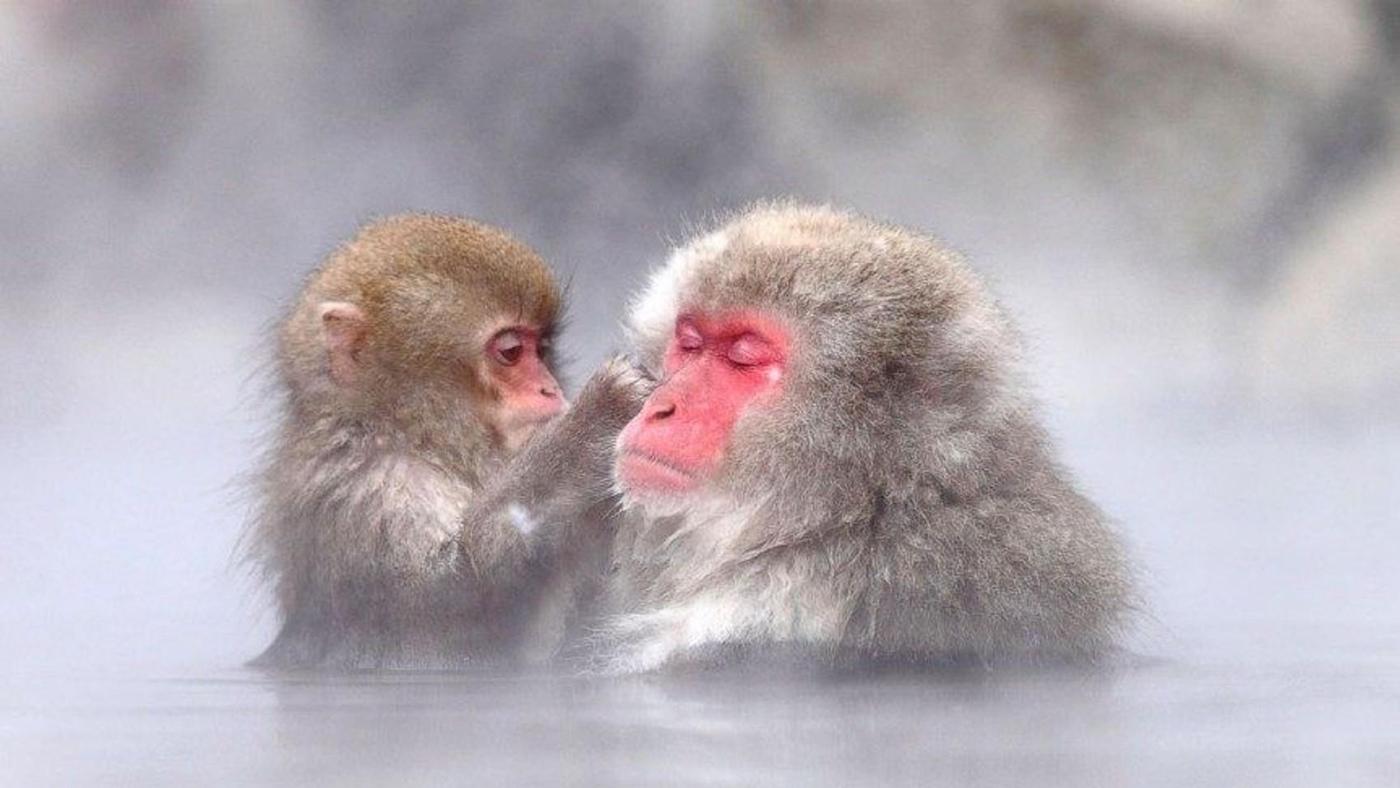
Winter is also when the monkeys are most reliably in the water, which is why the hardest month underfoot is the busiest · the odds, month by month → · or a day where the timing is somebody else’s job →
The clock, worked backwards
WORK BACKWARDSOne number decides your afternoon: the park wants you at the gate 30 minutes before it closes, and the gate is 25–40 minutes past the last place a vehicle can leave you.
The mistake is to plan forwards from arrival. The walk happens twice, the park asks visitors to arrive 30 minutes before it closes, and the monkeys are the part you came for — so the only sane way to plan the afternoon is from closing time backwards.
The last sensible start from Kanbayashi on a winter afternoon is 14:50 — and that already leaves you nothing at the pool.
The walk back is the same 25–40 minutes, after the gate has closed behind you, in the dark in November–March. Add it to the last bus down the valley and the afternoon is tighter than it looks on a timetable — which is the practical argument for the 9:00 opening rather than a late arrival.
THE CLOCK IS THE ONE THING HERE SOMEBODY CAN HOLD FOR YOU A guided day does not shorten the walk by a meter, and this page will not pretend it does. What it removes is the arithmetic above: the last bus, the 30-minute rule and the walk back become the guide’s problem. On a short winter afternoon that is worth more than it sounds.
Who the path rules out, and what works instead
THREE HARD LIMITSThree limits, all of them the park’s own, and all of them worth reading before somebody in your party finds out at the trailhead.
Not admitted
Wheelchairs and pushchairs cannot be used — the approach is slopes and stairs. This is the park’s own position, and it covers pushchairs and wheeled suitcases as much as wheelchairs.
Works
A child who cannot walk 1.6–2 km has to be carried the whole way, in both directions — a real thing to know before you build a day around it.
None at all
No animals may be brought in, service dogs included. This one is absolute and it catches people out; there is no arrangement to make in advance.
These are the park’s published rules, and no tour, price or booking changes any of them
The one part of this trip nobody is selling
NOBODY SELLS THISA useful test of any snow monkey page: search it for the walk. If it is not there, the page is written for search engines rather than for the person standing at Kanbayashi in the wrong shoes.
This site is paid when someone books a tour, and almost every page on it ends with a reason one might be worth buying. This section is the exception, and it is here on purpose: the 1.6–2 km is not for sale, at any price, to anybody.
EVERY ROW ENDS THE SAME WAY The private car costs about ten times the bus fare and stops in the same car park. Anything sold as a way around this 1.6–2 km is either describing a different place or selling something that does not exist. What the 1.6–2 km is actually like is further up this page, and so is what to wear on it in winter.
LIVE DATES · $140 (≈¥21,800) · FROM NAGANO STATION · TICKET INCLUDED · 965 REVIEWS
LIVE DATES · $151 (≈¥23,600) · TOKYO AND BACK IN A DAY · TICKET AND LUNCH IN · 359 REVIEWS
Both calendars are here because the sections either side of this one are about the clock and the ice, which a tour genuinely does change · the walk, which it does not, is the section you are reading
The walk, in 10 questions
How long is the walk to the Snow Monkey Park?
1.6–2 km each way and 25–40 minutes at an ordinary pace, from the Kanbayashi trailhead to the ticket window — 50–80 minutes of walking in total. There is no shuttle and no vehicle access.
Is the Snow Monkey Park walk difficult?
Not in the green season: the park calls it mostly flat with some slopes. It is an unpaved forest path with wooden steps near the entrance, so the difficulty is the surface rather than the gradient. In winter it is packed snow over ice and needs grip.
Can you drive to the Snow Monkey Park?
Only to Kanbayashi. Every vehicle — bus, taxi, coach, private car — stops at the same car park, and the last 1.6–2 km are on foot for everybody. Kanbayashi parking is free, year-round.
What shoes do you need for the Snow Monkey Park?
Ordinary walking shoes from April to November. From December to March, boots with grip or crampons over your own shoes — the path is shaded and icy for most of its length, and this is the thing visitors most often get wrong.
Can you rent boots or crampons at the park?
Boots, crampons and jackets rented/sold at the shop by the trailhead (Oct–May). That is a single first-party source, so bring what you need rather than counting on renting it.
Is the Snow Monkey Park wheelchair accessible?
No. Wheelchairs and pushchairs cannot be used — the approach is slopes and stairs, and the park states this itself. Pushchairs and wheeled suitcases are excluded for the same reason; a child carrier works.
Can you bring a dog?
No. No animals may be brought in, service dogs included — the rule is absolute and there is no arrangement to make in advance.
What time do you need to start walking?
In November–March, by about 14:50: the park closes at 16:00, the park asks visitors to arrive 30 minutes before closing time, and the walk up is up to 40 minutes on top. Starting then leaves you no time at the pool, so treat it as the last possible moment rather than a plan.
Does a tour let you skip the walk?
No, and none of them claim to. Every tour on this site — including the private cars at several times the price — stops at Kanbayashi and walks the same 1.6–2 km. What a guided day changes is the timetable and the ¥800 (≈$5.1) ticket, not the path.
Is the walk worth it?
That depends on the same thing the whole visit depends on: park staff work to attract the monkeys during opening hours, but the monkeys may not show up at all on certain days; appearances are particularly sporadic in autumn. The walk is a pleasant 25–40 minutes through cedar forest either way, which is a better consolation than most nature sites offer.
Distances, times and rules above are the park’s own · the guided day, with live dates →
1.6–2 km there, 1.6–2 km back, in whatever you brought
It is the easiest part of the day in September and the part that decides it in January. Nothing on this site, or anywhere else, shortens it — so the only useful decisions left are the month, the shoes and who is watching the clock.
OR THE PARK ITSELF · EVERY ROUTE TO KANBAYASHI · WHICH MONTH · THE TICKET